"Haiku" Exercise
Written retrospectively.
Each card has a “venue” descriptor (when it’s used as a venue card), a “training” quote and rule, and a “dueling” quote and rule.
I wanted all three of these to fit together, somehow.
I had a list of all of the different quotes I was pretty sure I wanted to use, but I felt like I wasn’t combining them right. So I had an idea: I’ll print out all the phrases / quotes, cut them out, and then I can physically manipulate them. I’m a tactile person – I like being able to touch things when I’m working with them.
So I exported a list of all the quotes and printed them onto pages:
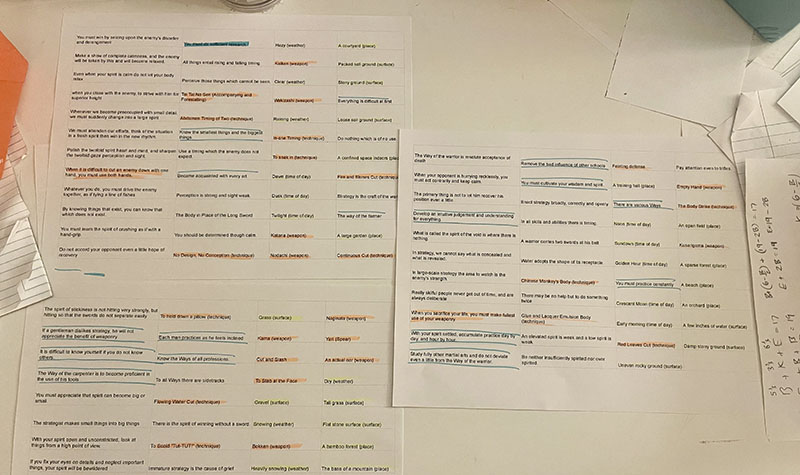
I went through and highlighted some of the quotes if I knew “ok this one is DEFINITELY going to be used for dueling”, to make it easy to be sure I had placed it correctly.
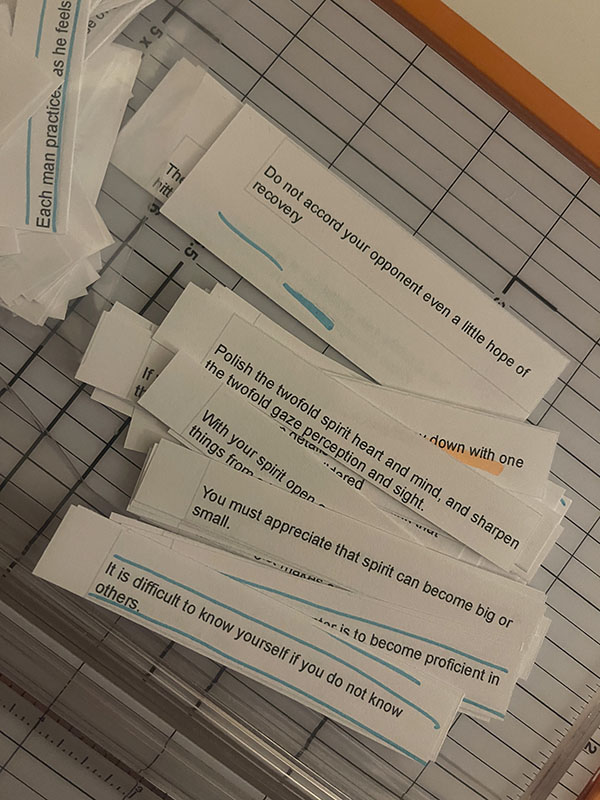
Then I cut them out using my paper cutter:
Then I laid them all out on a table in a loose grid.
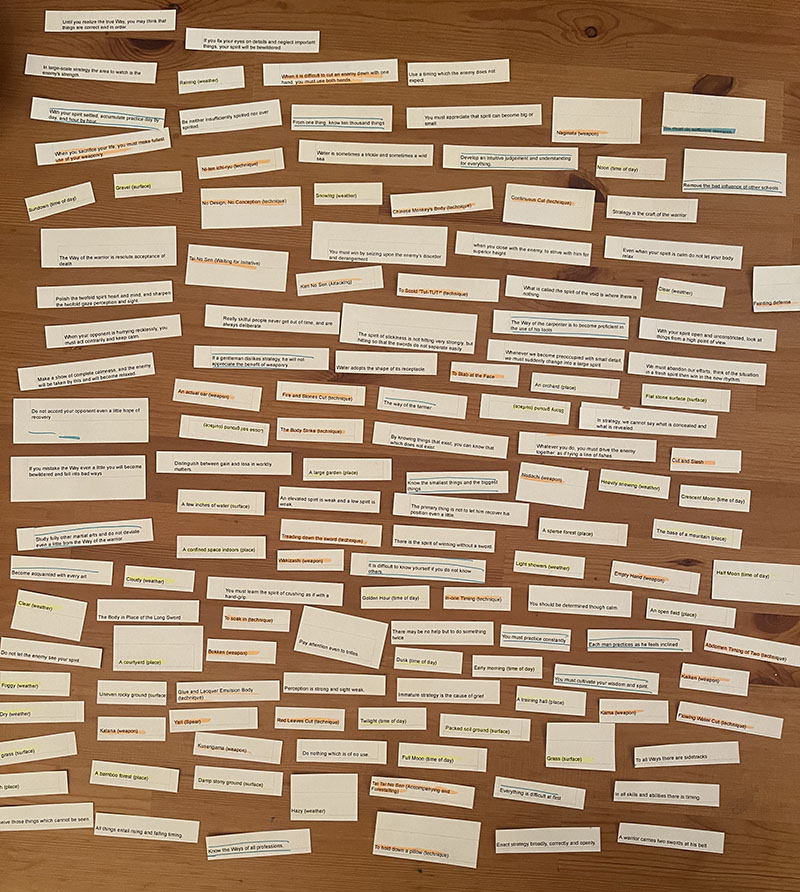
I instantly knew this was the right approach. Combinations started to jump out at me, so I quickly moved the slips of paper around, chunking them off. After the first pass, it looked like this:
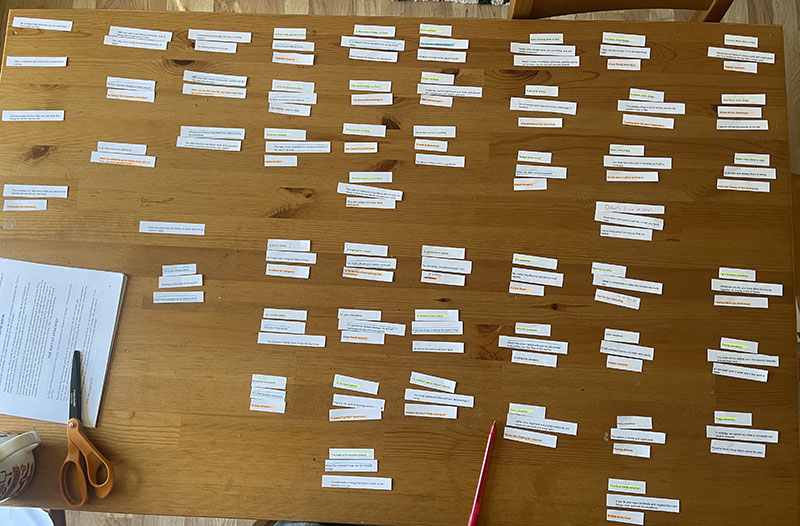
Jokingly, I realized these kind of read like little fortune cookie haiku. (Yes, I know I’m being VERY LAX with my usage of “haiku” here – humor me). I guess there more like “tryptychs” maybe?
What was especially neat was how many of these felt coherent, thematically:
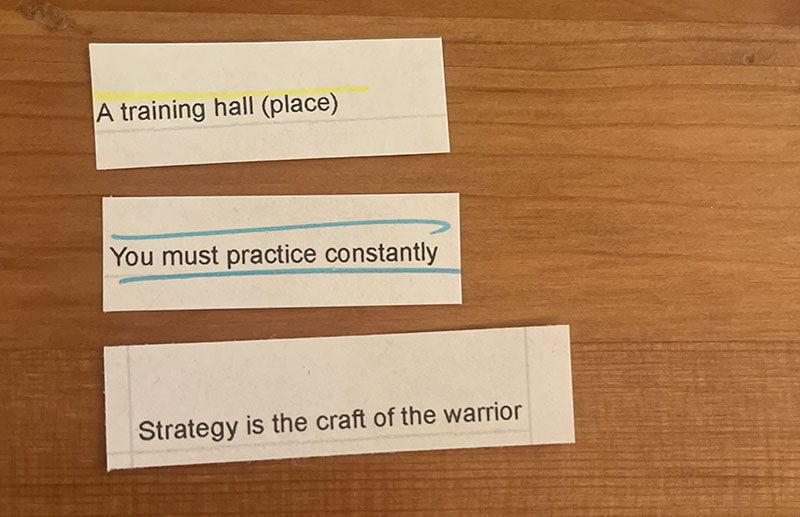
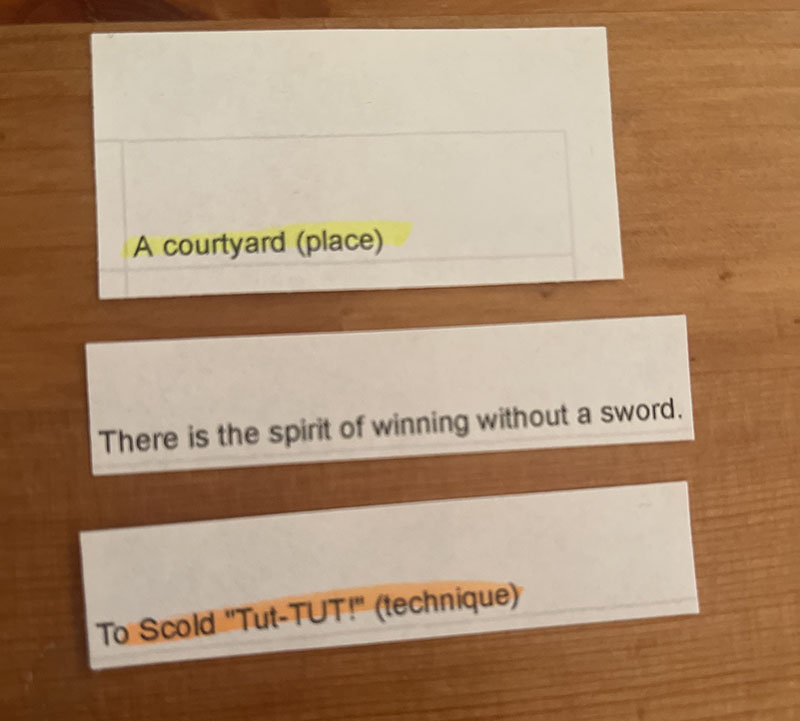
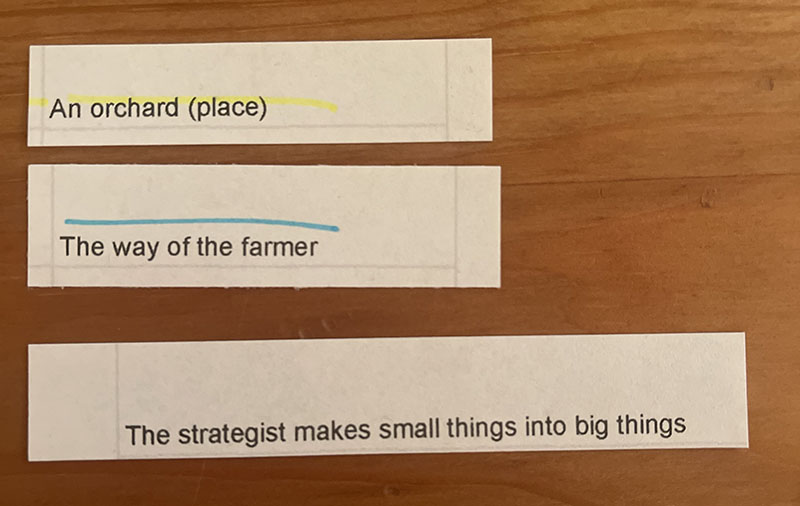
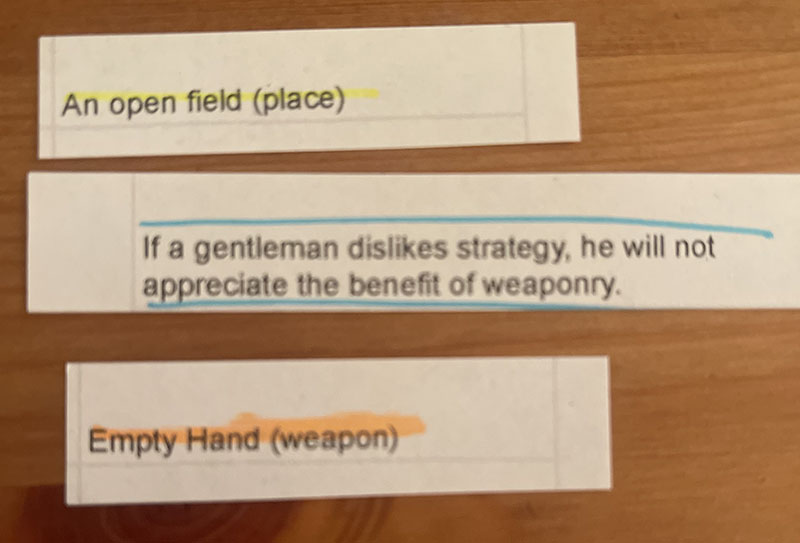
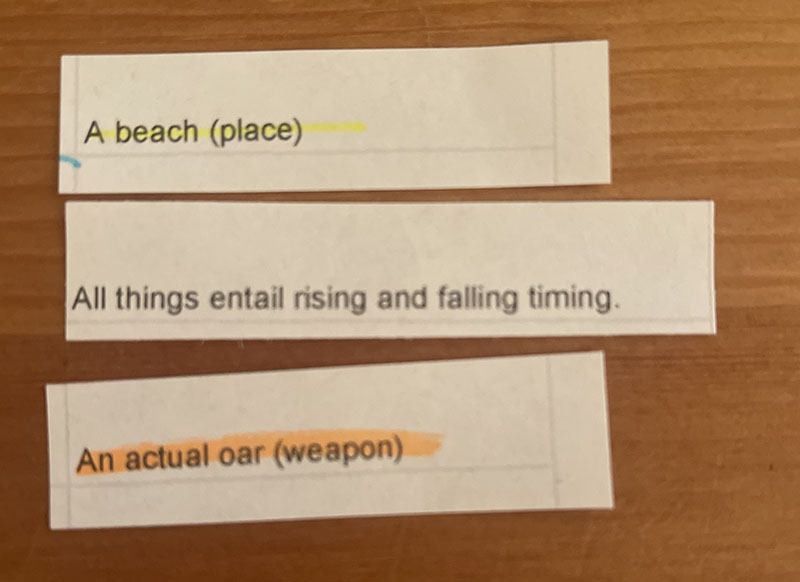
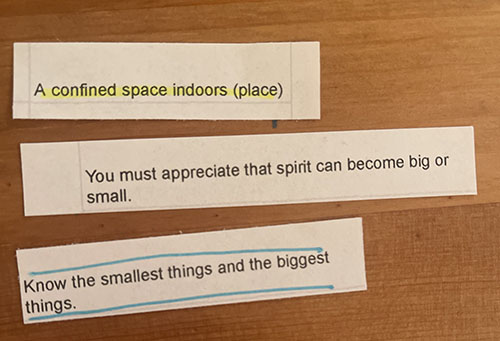
This exercise did two things: helped me re-arrange the cardlist in a way that felt more coherent, and also helped paint a fuller picture about, mechanically, how I wanted the card to function.
I knew that I wanted the same “feeling” for the card, whether it was used in “training” or “dueling”. So this helped to ascertain what that “feeling” was.